Lessons
Cells: the units of life
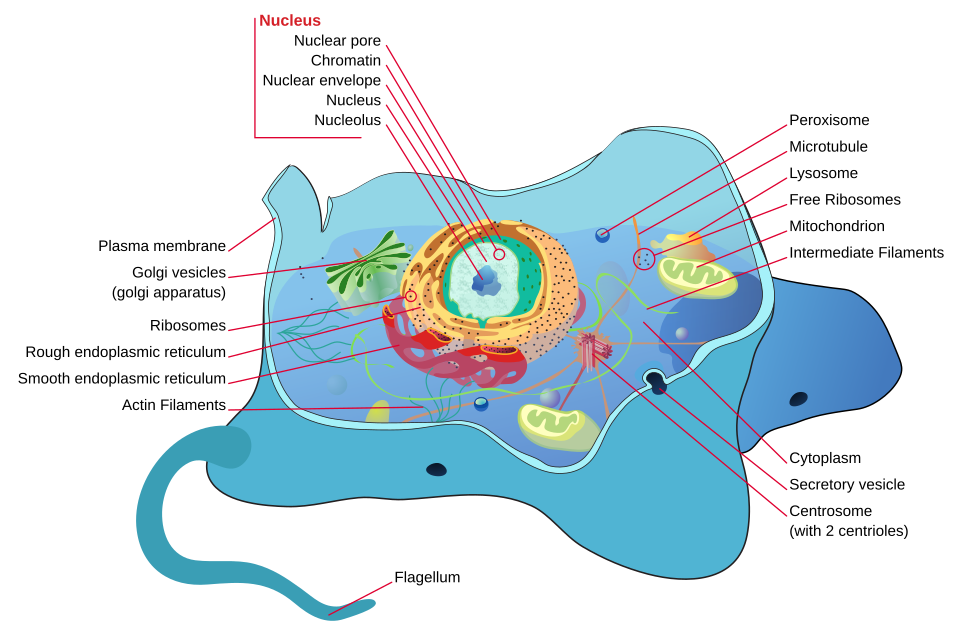
Every living thing is made of cells. Animal and plant cells share several organelles — specialized structures with specific jobs:
| Organelle | Function |
|---|---|
| Nucleus | Holds DNA; the cell's control center |
| Mitochondrion | Produces ATP energy via cellular respiration |
| Ribosome | Builds proteins from genetic instructions |
| Cell membrane | Controls what enters and leaves the cell |
| Chloroplast (plants only) | Captures sunlight for photosynthesis |
| Cell wall (plants only) | Rigid support outside the membrane |
Atoms, elements, and bonding
An atom has a nucleus of protons (+) and neutrons (neutral), surrounded by electrons (−). The number of protons — the atomic number — defines which element it is.
Types of chemical bonds
- Ionic: one atom donates electrons to another (e.g., NaCl — table salt). The charged ions attract.
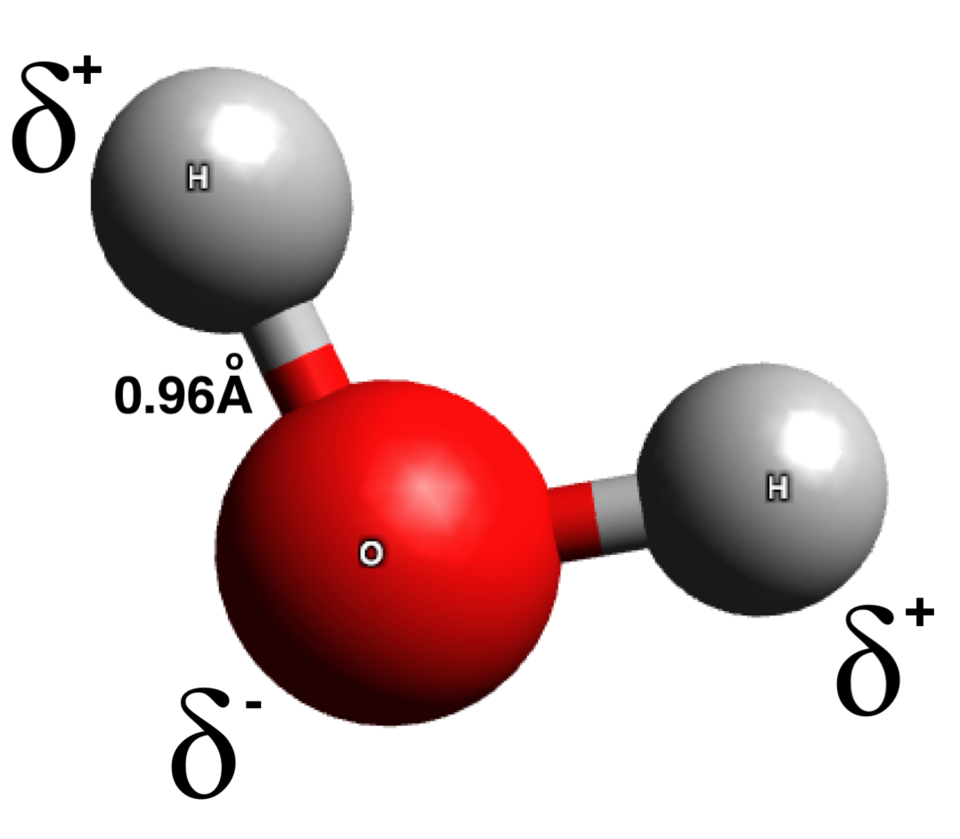
- Covalent: atoms share electron pairs (e.g., H₂O, CO₂).
- Metallic: electrons flow freely among metal atoms — that's why metals conduct electricity.
Explore every element in the periodic table below.
Acids, bases, and pH
pH measures how acidic or basic a solution is, on a scale of 0–14:
| pH range | Type | Examples |
|---|---|---|
| 0–6 | Acidic | battery acid (0), lemon juice (2), coffee (5) |
| 7 | Neutral | pure water |
| 8–14 | Basic | seawater (8), baking soda solution (9), bleach (13) |
Each pH step is a 10× difference in hydrogen-ion concentration — pH 3 is ten times more acidic than pH 4.
Newton's laws of motion
First law — inertia
An object keeps doing what it's doing (still or moving at constant velocity) unless a net force acts on it. That's why you lurch forward when a car brakes hard.
Second law — F = ma
Force equals mass times acceleration. Double the force → double the acceleration; double the mass → half the acceleration for the same force.
Third law — action & reaction
For every force there's an equal and opposite force. A rocket pushes exhaust down; the exhaust pushes the rocket up.
Energy and its forms
Energy can't be created or destroyed — only transformed (conservation of energy).
| Form | Description | Everyday example |
|---|---|---|
| Kinetic | Energy of motion: KE = ½mv² | a thrown baseball |
| Potential | Stored energy of position: PE = mgh | water behind a dam |
| Thermal | Random motion of particles | a warm cup of tea |
| Chemical | Stored in bonds | food, batteries, gasoline |
| Electrical | Moving charges | current in a wire |
| Radiant | Carried by light/EM waves | sunlight |
Evolution by natural selection
Populations change over generations because individuals with traits better suited to their environment survive and reproduce more — that's natural selection. Three ingredients are required:
- Variation: individuals differ (mutations and genetic shuffling create differences).
- Heritability: traits can be passed to offspring.
- Differential survival: some variants leave more descendants than others.
Interactive periodic table
Click any element for its atomic data. Color-coded by category.